


Fine arts are deeply ingrained part of the Japanese culture. While I lived in Japan I saw Bunraku, Noh, and Kabuki theatre performances. My favourite was kabuki.
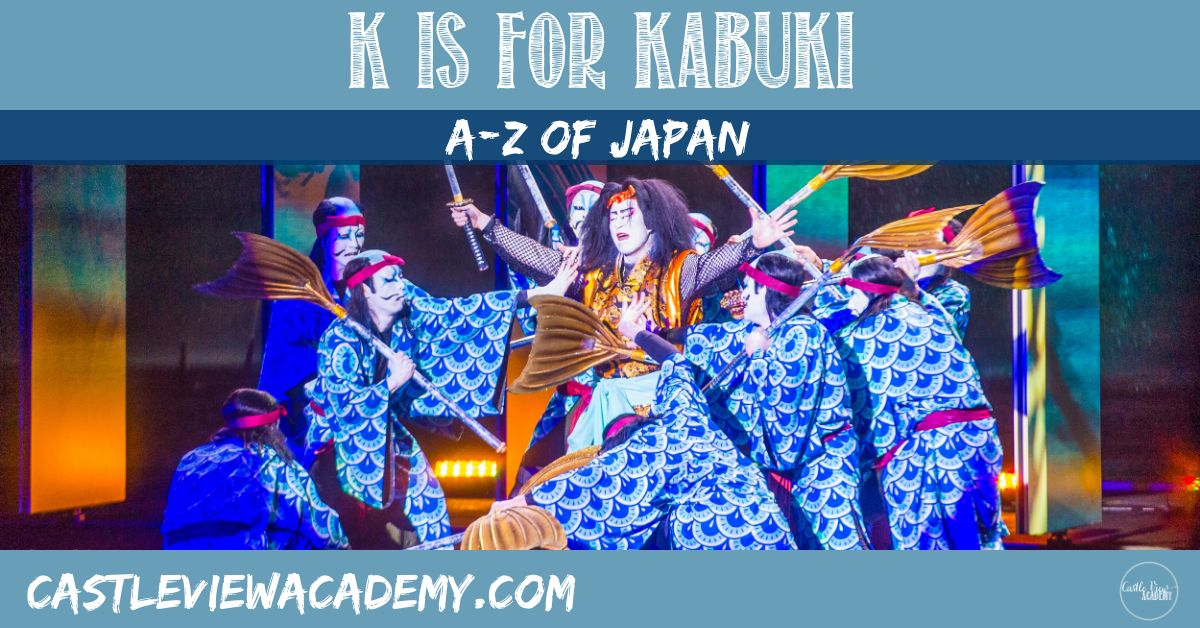
What is Kabuki?
Kabuki is one of the traditional performing arts in Japan. It’s a stylized production that can be loud, over-the-top at times, but always good drama. Imagine watching your favourite drama acted out in front of you in person with enthusiasm.
Kabuki has a long history, and the performers are revered as movie stars are in the West. Kabuki translates now as song, dance, and skill. Kabuki actors (yes, they are all men) practice and hone their skills to near-perfection.
The costumes have been passed down through the centuries and some are so delicate that they can not be washed. I have been told that after such time, some of the costumes have become a little ‘whiffy.’ Although Japanese people are not big sweaters, under the hot stage lights and heavy costumes, I don’t doubt the claim that the costumes could use a good airing out.
Kabuki-za
The first time I saw Kabuki was with my friend, Michelle, and we bought a ticket for just one act as we didn’t know if we would like it or not. That is a good way to try it out; it’s very affordable and gives you a taste of what it’s all about. The price varies upon the performance and the length of the act.
The second time I visited Tokyo I also watched one act of a performance, then when I left the theatre, I purchased another act as I was enjoying it so much and had time to spare.
As you can see, the theatre, Kabuki-za, was unmissable with its classic Japanese architecture and colorful banners hung with care outside.

The third time I wanted the full experience as it was my last night in Japan before flying home to Canada. I went out and bought a ticket for the full 4 hours and 45 minute performance. I rented the headphones, which when worn during the performance explains parts of the story to you in English. Not the full dialogue, just a little bit here and there to get the jist of what is taking place so that it doesn’t distract you. And for to fully immerse myself in Japanese culture one last night, I also ordered my dinner, which was waiting for me at a table during intermission.
The Full Kabuki Experience

When it came time for intermission and my last meal in Japan, everyone basically goes into the dining lobby and can sit anywhere. However, they put my name on a piece of paper and propped it up against my meal so I had no doubt about where to sit. You can see my place-setting in the image above along with the poster and my ticket that I have in one of my Japanese scrapbooks.
My meal was delicious, and if I can recall, it was perhaps another ¥2,000 or so in addition to the ¥4200 ticket price, but definitely worth the experience if you can afford it. I would go again in a heartbeat.

If you’d like to garner a little taste of what Kabuki entails, here’s a half-hour video you can watch.
As you can see, the Kabuki actors put their whole soul into their craft. The live music, simple yet intricate set designs, and the atmosphere of the historic building all add to the experience.
If ever you have the opportunity to see a live Kabuki performance, do it! It is the most exciting and lively of the three traditional theatre genres in Japan, and you won’t soon forget it!
More posts from the A-Z Series


