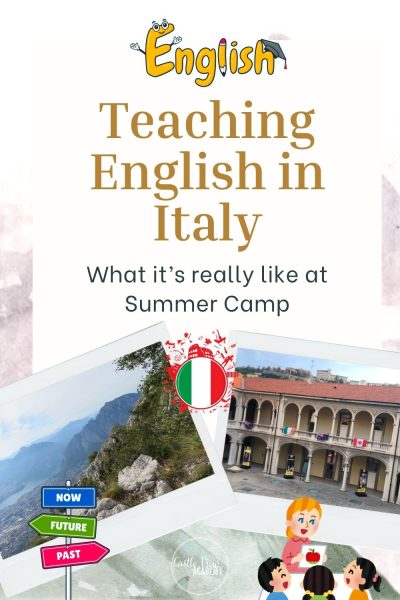
Thinking about teaching English in Italy? Maybe you’ve seen the glossy travel pics and daydreamed about pasta, piazzas, and language games in the sunshine. I’ve literally been there and done that! I taught at an English camp in Bergamo in Northern Italy, and I’m here to give you the real picture. Even at 50, it was definitely an experience worth having. Here’s my take on the pros and cons of teaching at an English camp in Italy.
The Upside: Why I’m Glad I Went
Living the Culture, Not Just Seeing It
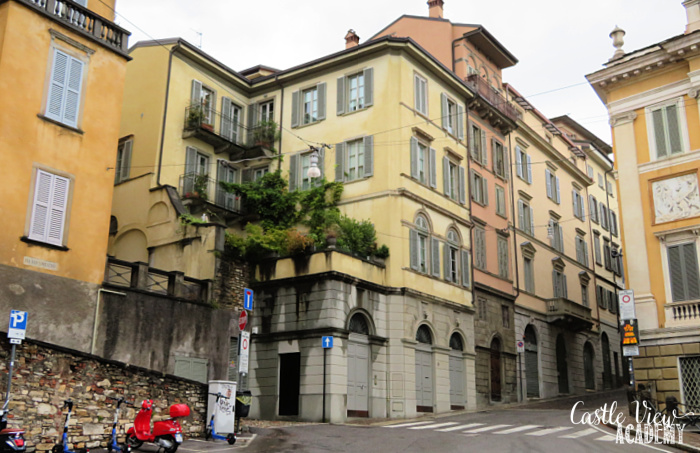
One of the biggest perks? Living and breathing Italian culture. Staying in a Bergamo suburb with the most welcoming host family meant I wasn’t just seeing the sights as a tourist, I was grocery shopping, navigating the buses (admittedly, the last day I got on the wrong bus and ended up walking over an hour to get back home – so embarrassing but it meant I saw areas I wouldn’t have seen otherwise), asking questions of strangers in my few words of Italian, and soaking up the slower pace in this area of Italy. It’s a very different feel from the crowded cities of Rome and Milan. Camp wasn’t just about teaching; it was about being part of a community.

More Campfire Songs Than Grammar Drills
Teaching at an English camp is quite different from teaching in a formal classroom. The vibe is casual and fun (think camp games, silly songs, and creative skits), which takes the pressure off both students and teachers, although there is still a lot of planning and prep involved! It creates an environment where kids feel more comfortable using English, even if it’s just shouting “duck, duck goose!” during a morning game to burn off some energy before a classroom lesson.
Professional Growth on Fast-Forward
You’ll learn a lot in a short time about teaching, improvisation, group management, and how to keep a group of kids entertained without tech and with a pack of coloured paper. My group was one of the smallest, but also the youngest (which meant building in time for plenty of potty breaks throughout the day, and feeling like a cat-wrangler for the first day and a half until everyone knew the routine and understood my arm gestures). It helped me rebuild confidence and flexibility as a teacher. The experience is an excellent addition to your CV if you’re considering more international or ESL work in the future.
Connections and Camaraderie
Camp brings people together fast. I made lasting friendships with my host family, and hanging out with the young teachers just starting out gave me a new perspective (even if I was a little older, but we all had something to bring to the table).
Having had such a perfect host family match (not everyone did, unfortunately), I was introduced to their family and friends and given an experience so much greater than I ever expected. Cooking lessons, travelling to Lake Garda, Lake Como, taking a cable car up Mt. Erna, going into Milan, and many more wonderful experiences were worth their weight in gold!
The Downside: What No One Tells You
Summer Brain Mode
Camps usually run during school breaks (which are about 3 months long in Italy), so don’t expect students to show up ready for academic deep dives, particularly if it’s the end of summer. They want to play and have fun, and honestly, who can blame them?
You’ll need to get creative with lessons that feel like games, and have plenty of backup activities on hand. This is where my teaching in Japan came in handy. I pulled out some of the songs and games I used back then and adjusted them.
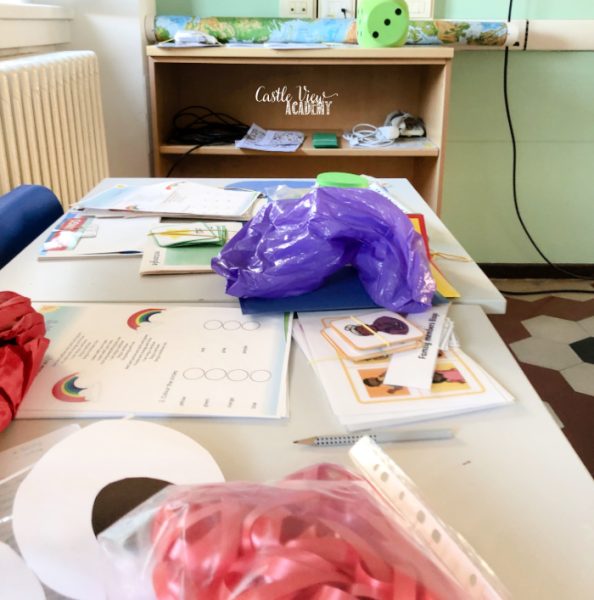
Each day there were small group activities, sports games when a couple of groups would join up, as well as times where the whole camp came together to learn songs and put on a fun story performance on the last day for the parents.
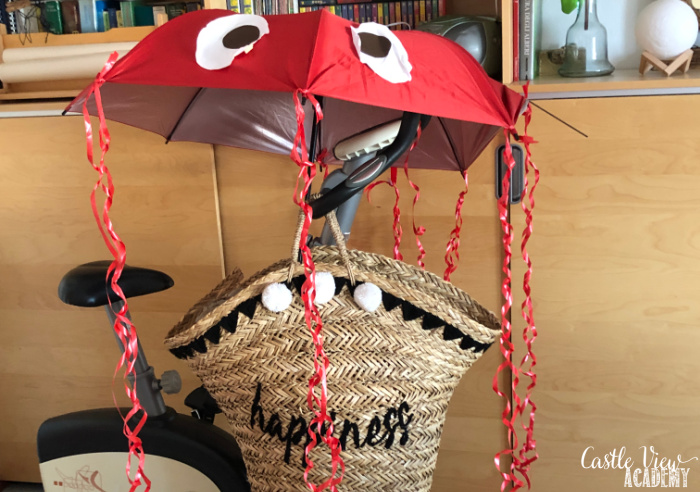
There was a day when everyone dressed up in homemade costumes with the week’s theme. Some parents went all-out in their design skills, and for those who didn’t come with costumes, we helped turn them into sea creatures using crepe paper, construction paper, and a stapler. No one was left out!

Another day there were outdoor activities such as a sand box, races, water balloon fights, and a slip and slide. The kids had a lot of fun with this! I dare say the older the kids, the more fun they had. Did I mention that this camp was for student from 5/6 up to about 16 years old?
Language Barriers (and Misunderstandings)
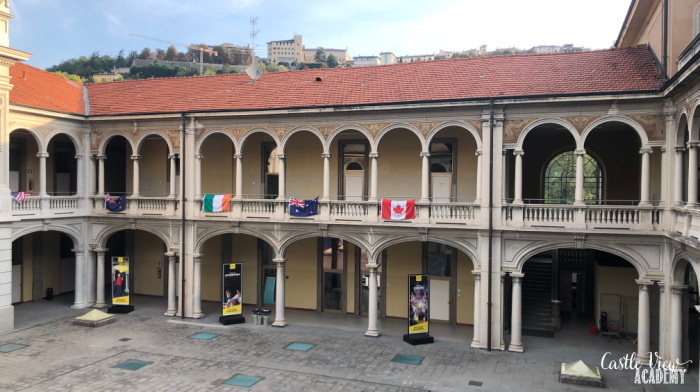
If your Italian is rusty (or nonexistent), prepare for some interesting communication moments. While the kids are there to learn English, you will often need to communicate through miming, drawing, or using very simple vocabulary. It’s a challenge, but it can also be kind of fun, think of it like your own daily game of charades. In my experience, the international sign for needing the toilet is the same in Canada, Japan, the UK, and Italy!
It’s a Sprint, Not a Marathon
Camp days can be long and packed with activities. Between teaching, supervising, and leading games, there’s no downtime (in our case, we had about 30 minutes after lunch to retire to the teacher’s prep room and either prep, chat, or lay on the cool floor to rest and recharge. Although we had a week of lesson planning ahead of the camp, I still found myself doing some extra prep and review in the evenings to make adjustments for the next day based on how things evolved over the week. I also needed to make a homemade themed costume for one day when everyone dressed up! Be prepared to run on enthusiasm and adrenaline, and espresso.
By the end of the camp, you’ll be completely exhausted and drained, but loving every minute of it (hopefully).
Resources Might Be Limited
Don’t expect smartboards or a photocopier that always works. Our camp was held in private school buildings (different activities took place in the different buildings on campus. You’ll often be improvising with whatever materials are available. Bring your favourite low-tech games, visual aids, and a stash of blue tack (I’m going to surprise the camp organiser by sending her some this summer because it isn’t available there). I also took some stickers (raiding my home ed supply), fancy pencils and erasers, and a few local sweets for the kids. I also took some items as thank yous for my host family and her extended family and friends who graciously treated me like royalty.
My Top Tip? Embrace the Unexpected
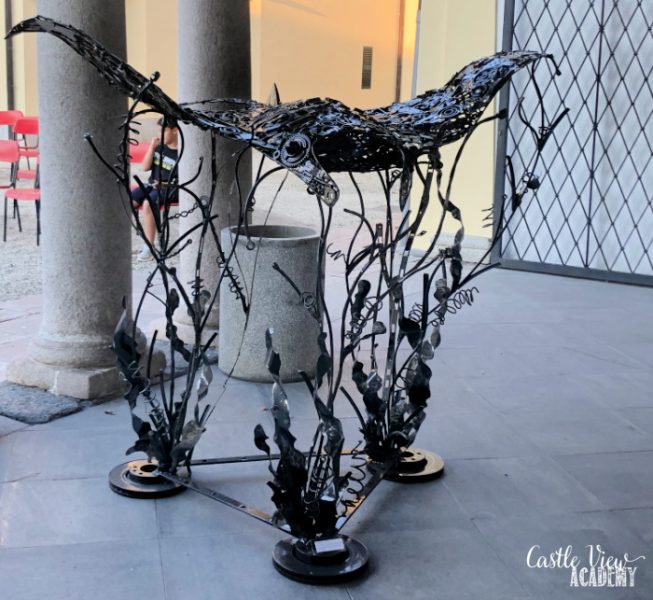
The best moments weren’t always the ones I planned. My host had been given the wrong date for my departure and I was staying an extra day. She rolled with it and took me along to an art exhibit opening that was raising money for a sector she worked in. There was some live music, too, that we enjoyed. Following this, we attended the small town festival that was taking place and had a glass of wine and another local specialty, pizzoccheri. Chatting with a range of characters who sat at our outdoor table was special.
There were of course, many memorable moments with my class of students. Every student had their own personality and one who was a bit of a struggle the first 2 days became my best ally by the end (psychology and parenting tricks I had up my sleeve certainly helped turn things around without too much stress for either of us).
Final Thoughts
Teaching at an English camp in Italy isn’t for everyone. It’s intense, unpredictable, and absolutely exhausting. But it’s also full of laughter, connection, and the kind of cultural immersion you can’t get as a tourist. If you’re adaptable, energetic, and open to a bit of organised chaos, it can be an unforgettable teaching adventure.
Would I do it again? Absolutely, without a moment’s hesitation! My family encouraged me to go in the first place, and I know they’d support me again, whether I go alone or take the teens with me.
Quick FAQs
Q: Is English camp teaching the same as regular ESL work?
Not quite. It’s more playful and activity-based. Think less grammar worksheets and more charades, songs, and scavenger hunts.
Q: Do I need to speak Italian?
No, but it helps. You’ll be teaching in English, but knowing basic Italian can smooth over daily interactions. Our camp had a couple of university bilingual students to help, but they weren’t available to all classes (such as mine – but as I had previous experience teaching ESL and as a parent, I managed just fine).
Q: Is it suitable for first-time teachers?
Yes, if you’re enthusiastic and flexible. My camps provided training and some materials to get us started. There were 2 people who had just finished their teaching degrees and this was their first experience out of uni.
Q: What should I pack?
Comfortable clothes, adaptable lesson ideas, your sense of humour, and maybe a travel guide for those off-days.
More Info About Summer Learning: