Home education has been a wonderful part of our family’s life, but it hasn’t always been easy to make everything work financially. Like many families, we’ve had to balance everyday living expenses with the things we wanted to provide for our children.
Disclosure: This is a sponsored post featuring a paid link to Gerber Life. All experiences and opinions are my own.
Over the years, I’ve learned that homeschooling doesn’t have to cost a fortune. It does, however, take some creativity, planning, and a willingness to make the most of opportunities that come along.
From budgeting for household expenses to reviewing hundreds of educational products, we’ve found ways to stretch our money while giving our children a varied education.
Budgeting for the Whole Year, Not Just the Month
Ever since we signed our mortgage, I’ve prepared an annual household budget, which I review each year. I start by adding up all our known expenses, whether they’re due monthly, annually, or somewhere in between. This includes our mortgage, heating, electricity, groceries, running a vehicle, insurance, piano lessons, and, of course, home education expenses.
I also include expenses I know are coming up, along with a little padding in areas such as household and garden maintenance, where costs aren’t always predictable.
Then there’s a separate line for our emergency fund. Even when money is tight, I’ve always set aside a small amount each month, even if it’s only £10.00 – that adds up over time!
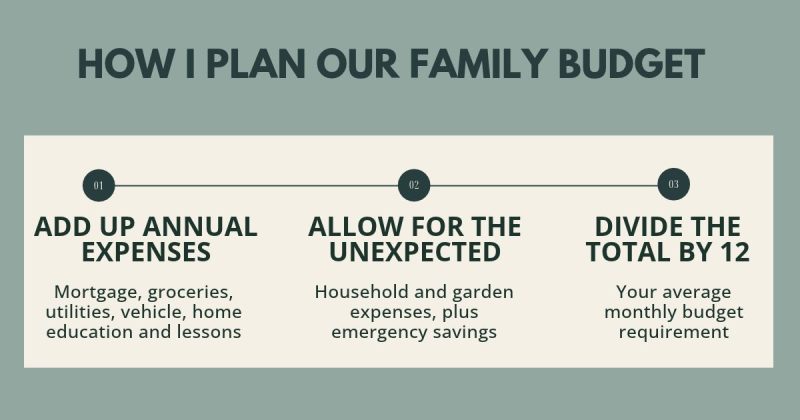
Once everything is added together, I divide the total by twelve to work out how much we need to budget each month. This helps smooth out those months when several larger expenses arrive together. It also encourages me to think beyond the immediate bills.
Long-term financial planning is part of this, too. As parents, we need to consider what would happen if our family’s circumstances changed dramatically. For families in the USA, understanding term life insurance costs can be one part of considering how to protect loved ones financially.
Here in the UK, MoneyHelper’s family budgeting guide is a useful free resource for anyone wanting to get started.

When Life Doesn’t Follow the Budget
Of course, having a budget doesn’t mean everything goes according to plan!
We’ve had the washing machine break down during chickenpox (because there’s never a convenient time for that!) a fridge that no longer worked (3 days before my parents arrived from overseas), and a freezer give up, leaving us with bags of thawed food that had to be thrown away.

It’s not just the cost of repairing or replacing an appliance that can throw your finances into disarray. Sometimes there’s a knock-on effect, such as losing all that food you’ve bought, freezer prepped, and stored away.
These are exactly the sorts of situations that remind me why an emergency fund matters. Even putting aside a little each month can help soften the blow when something unexpected happens. It doesn’t need to start with a large amount. Even putting aside a little each month can help when something unexpected happens.
The Consumer Financial Protection Bureau has a useful guide to building an emergency fund, including ideas for families with limited or irregular income.
Our Unusual Approach to Affordable Home Education
One of the biggest ways we kept homeschooling affordable was through product reviews. Over the years, I’ve reviewed 100s of educational products, books, games, subscriptions, and resources here on Castle View Academy.
At times, I jokingly referred to our approach as “review school”!
Reviewing wasn’t simply a case of receiving free products. It involved time spent using resources with the children, observing what worked (and what didn’t), taking photographs, and writing detailed, honest reviews. Each one took a minimum of 5 hours, plus about 5 weeks of use. I don’t know how I did it!
But it also gave us access to educational opportunities that otherwise were beyond our budget.
We explored a wide variety of subjects and approaches, and the children had opportunities to try resources we never would have discovered otherwise.

I’ve shared many of these experiences in my Castle View Academy reviews, including financial education resources such as CleverDough and Personal Finance Lab.
We also made use of free resources, libraries, and opportunities to learn through everyday life. Home education doesn’t have to mean purchasing an expensive curriculum for every subject.
Teaching Children About Money Through Everyday Life
One advantage of home education is that learning doesn’t have to be confined to textbooks. Budgeting, comparing prices, planning purchases, and discussing needs versus wants can all become practical lessons.
We used financial education resources, including CleverDough and Personal Finance Lab, but there were also opportunities to learn simply through ordinary family life.

K learned about turnover, expenses, and profits while selling cookies to our neighbours, and we’re quite disappointed that her professional bakery course at college doesn’t include the business side of the trade.
Understanding that money needs to cover groceries, household bills, transportation, and other essentials before we can spend it on extras is an important life skill.
The Consumer Financial Protection Bureau’s spending and budgeting guidance offers another useful resource for thinking about regular and less frequent expenses.
Working Around Our Homeschooling Days
Another part of making our finances work was finding ways to earn an income around our family commitments.
I work as a Virtual Assistant, and when the children were younger, I worked after they’d gone to bed. It made for very long days, but it worked at the time. These days I work while the teens are in college.
It wasn’t always easy balancing work, home education, household responsibilities, and everything else that comes with raising a family. There were certainly some long days!
But working from home gave me a way to contribute financially while continuing to educate the children. For families considering a similar arrangement, it’s worth remembering that flexible work still requires time, organisation, and realistic expectations.
Finding What Works for Your Family
Looking back, I think one of the most important things I’ve learned is that there isn’t one perfect way to manage family finances or home education. What works for one family might not work for another.
Some families have larger budgets for educational resources, while others need to be more creative. Some parents work full-time, some part-time, and others arrange their working hours around their children’s needs.

For us, annual budgeting, keeping a small emergency fund, reviewing educational resources, and fitting work around family life helped make home education possible.
We’ve had unexpected expenses, financial challenges, and plenty of occasions when plans needed adjusting, but I’ve found that planning ahead, making thoughtful choices, and being willing to adapt can make a big difference.
And sometimes, the most valuable lessons our children learn aren’t from the resources we buy, but from watching how we approach everyday life.
More Ways to Make Homeschooling Work for Your Family:
If you’re looking for more ideas on balancing home education, family finances, and working from home, you might also enjoy these posts from our homeschooling journey.


