Kyoto is a spectacular and special city – so much so that it was greatly spared from bombing during WWII. The history and heritage are absolutely amazing and second to none. There are endless things to do and sights to see in Kyoto, and the book, 100 Kyoto Sights is just a drop in the bucket list, but an excellent place to begin.

This post may contain affiliate links through which I may receive a small commission.
Tuttle Publishing kindly sent us a copy of 100 Kyoto Sights: Discover the “Real” Japan by John Dougill and Patrick Hochner to read and review in exchange for our honest review.
It is said that you could visit a different temple each day for a year and still not run out of them in the city of Kyoto, and I believe it! When I lived in Japan, I found Kyoto to be the most foreigner-friendly city. There were plenty of English/dual language signs on the buses, and the fares were very reasonable, in fact the tourist travel passes were the least expensive I encountered anywhere (disclaimer: things may have changed).
There’s so much to do in Kyoto, it’s hard to know where to start. You may want to see the very popular locations such as Kinkaku-ji Temple, Kiyomizu Temple with its 3 waterfalls, or Ryoan-ji Temple with its famous zen garden, but there’s so much more.
Be sure to also put a couple of the lesser-known spots into your itinerary. I arranged to have a local volunteer guide with us for a day, which meant that we were able to visit a location that was only accessible if you were with a fluent Japanese speaker. Our guide was a university student, and we kept in touch for about a decade after.
4 Parts to Exploring the Kyoto Sights:
100 Kyoto Signts is conveniently divided into 4 areas of interest, as you’ll see below. With nearly 100 recognised gardens and 17 Unesco World Heritage sights (16 are included), it’s hard to know where to start when you arrive in Kyoto.
I agree with the division of locations in this book – choose 1 area per day and plan your route well to take in as much as you can without feeling rushed.
1. Experience Kyoto’s Unique Culture up Close
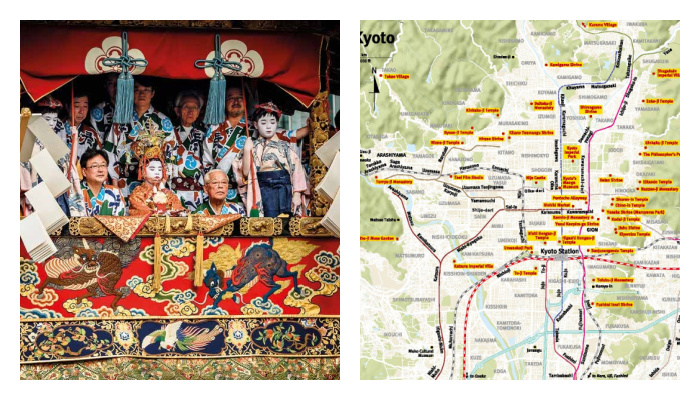
When you are planning your visit, see if there are any festivals that coincide with your visit – they are listed at the front of the book. One of my visits was during the Daimonji (大文字) festival, and it was definitely a highlight.
Various aspects of Kyoto’s culture are explained, including “The Maiko Tradition: Trainee Geisha with Poise and Beauty.” I will take a quick moment to remind you that you are a visitor and must be respectful of the culture you are visiting. Do not take photos of geisha or maiko. A good rule of thumb when travelling is to try not to take photos with people in them who may not want to have their photos taken. Do not be a nuisance and find out you were the reason all future foreigners are excluded from a location.

If you are able to see any traditional Japanese theatre while in the country, I very much highly recommend it! Not once was I disappointed. Kyoto is the place for Noh theatre, with very slow-moving and precise movements. I wasn’t able to see a proper performance, but I loved the opportunity to sit in the seats (in Kanazawa) and watch part of a practice.
As you wander through Kyoto, you’ll soon notice the hand-made arts and crafts, from ceramics to kimono, as well as kitchen knives and many other items. Take time to appreciate their quality. And don’t forget to stop and have a delicious meal – which in itself will be a work of art.
2. Exploring the City Center & the Eastern Hills
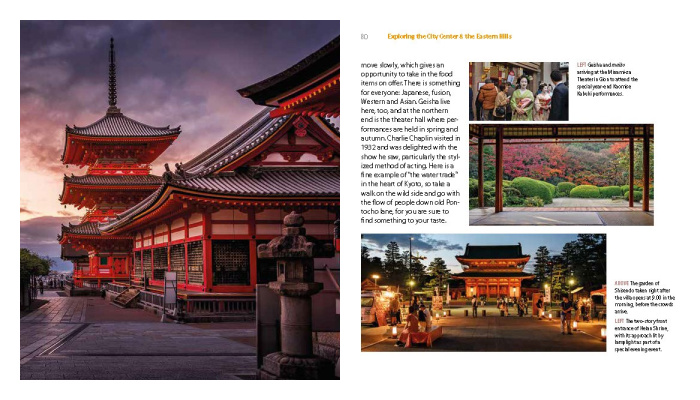
Most people will arrive into Kyoto via train, getting you up close and personal with Kyoto Eki (train station), which was the most beautiful station I came across. It’s unique, very open and spacious, and the modernness of it is a lovely contrast against the traditional nature of the city.
Kiyomizu Temple complex is a place you could easily spend a few hours, and the views from the hill there are first class. I’ve been twice, and wanted to visit again, but I also wanted to visit places that I hadn’t yet been to.
I was pleased to see Sanjusangendo Temple also included. It’s the world’s longest wooden building and houses 1000 Buddha figures. It’s only a 20-minutes walk from the station, so it’s easy to get to.
3. Exploring Northern & Western Kyoto
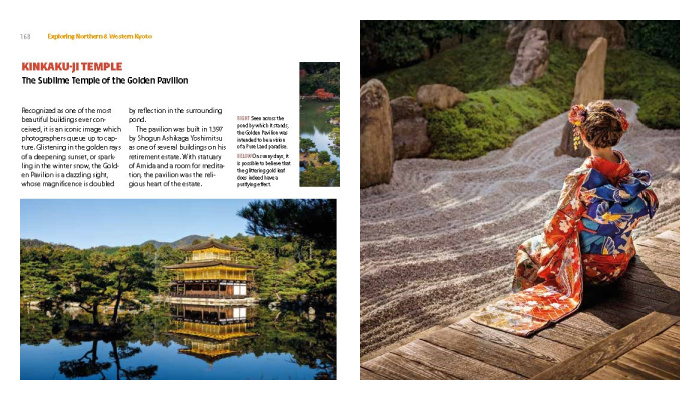
Kinkaku-ji Temple must be one of the most famous landmarks of the city with its gold-leaf exterior. Even on a cloudy day, it’s striking. Certainly stop here if it interests you, but also plan for a walk along the Philosopher’s path, and if you are a fan of zen gardens, the iconic Ryoan-ji Temple is also in this area. Try not to go at peak times so you can sit and enjoy the peace.
4. Excursions Around Kyoto
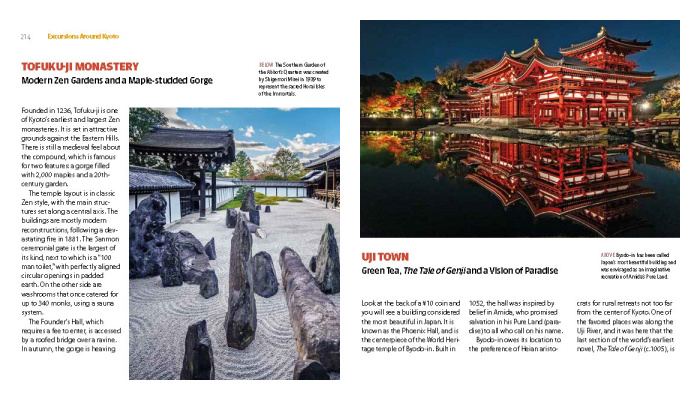
Get away from the bustle of Kyoto and see what awaits you outside the city. There are many possible day trips from this city, if you are using it as a home base for your travel in the area. There are 14 such day trips in this book, all of which are enticing.
One of my favourite places was the Tofuku-ji Monastery (image above), with its many differently-styled gardens, and the well-crafted wooded bridge with a view into the gorge. The small and varied gardens here were my favourite, and one of the top places I visited.
Another favourite day-trip from Kyoto is Nara, with its deer park and one of the 3 Great Buddhas of Japan seated in Todai-ji temple. I’ve been here twice while showing family and friends around Japan, and would very happily visit again.
In Conclusion
I love to sit on a Sunday afternoon with a cup of tea and relaxing with a book, and books about Japan always make me reminisce about my time there, as well as plan trips in my head for the future. I was fortunate to have seen so much of the country, but Kyoto is one place I will always put at the top of my future plans. Where would I go? I would definitely like to go to a flea market and see a Noh performance.
The Nanzen-ji Monastery looks beautiful, as does Shugakuin Imperial Villa. Teramachi Shopping Arcade is also on my list. There are a few items I didn’t manage to buy while I was there, and have been on my wish list for 20 years.
A little side-trip to Old Fushimi Town, the home of saké, would be a nice way to see some of the countryside and the slower pace of life.
As you can see, 100 Kyoto Sights covers a lot of ground in a small book and would be a great gift for someone before they head off to Kyoto, or anyone interested in Japan or architecture.
My daughter also enjoyed reading this book at bedtime because Japan is her top bucket list country for travel, according to an assignment she handed in last week. I do hope that we can all travel there together and I can show my family the real Japan.
If you’re interested in purchasing 100 Kyoto Sights, it’s available through:
- Tuttle Publishing
- Amazon
- Great bookstores near you
Connect with Tuttle Publishing:
Website | Facebook | Twitter | Instagram | Pinterest | YouTube
More Posts About Kyoto:


